Diamonds announce themselves. Wood whispers. In a world of identical luxury logos, Japanese craft jewelry offers something rarer: a story you can wear. This guide covers why wood — and hinoki in particular — makes extraordinary jewelry, which traditional Japanese techniques to look for, and how to choose a piece that will last a lifetime.
Hinoki: The Sacred Wood of Japan
Hinoki (Japanese cypress) has been Japan's most revered building material for over 1,300 years. Horyu-ji temple — the oldest wooden building on Earth — was raised in hinoki and still stands. Shrines at Ise are rebuilt every twenty years exclusively in hinoki. The wood is naturally durable, resistant to moisture and insects, and famous for its clean, calming fragrance: walking into a hinoki bath house is Japan's original aromatherapy.
These same qualities make hinoki remarkable jewelry: it weighs almost nothing, never feels cold against winter skin, and carries its forest scent for years.
Three Reasons to Wear Wood
1. Fragrance — forest bathing, worn
A hinoki piece releases a faint, clean scent with the warmth of your skin — not perfume, but the forest itself. It is jewelry for the senses, not just the eyes.
2. Lightness — one-tenth the weight of metal
Hinoki's density is roughly 0.4 — compared to 10.5 for silver and 19.3 for gold. Even bold, sculptural earrings weigh almost nothing. Wearers forget they have them on; their ears do not.
3. Aging beauty — jewelry that grows with you
Wood is wabi-sabi made wearable. Where mass-produced jewelry is most perfect in the shop, wood deepens in color and luster with every wearing, slowly turning amber. Ten years on, your piece exists nowhere else in the world.
Wood vs. Metal — An Honest Comparison
| Quality | Hinoki (wood) | Silver / gold (metal) |
|---|---|---|
| Weight | Extremely light (density ~0.4) | Heavy (density 10–19) |
| Feel | Warm, never cold | Cool to the touch |
| Scent | Natural hinoki fragrance | None |
| Metal allergy | Wood itself: none | Depends on alloy |
| Aging | Deepens beautifully | Tarnishes (polishable) |
| Water | Wipe dry promptly | Resistant |
The finest contemporary pieces combine both: KUMIKI pairs hinoki with silver 925, gold, K18, and platinum fittings — the warmth of wood, the permanence of precious metal.
Traditional Japanese Craft Techniques in Jewelry
| Craft | Material | What it brings |
|---|---|---|
| Edo kiriko | Cut glass | Faceted glass that scatters light |
| Maki-e | Lacquer & gold powder | Painting with gold on deep lacquer |
| Raden | Mother-of-pearl | Iridescent shell inlay |
| Tonbodama | Glass beads | A patterned universe in each bead |
| Mizuhiki | Paper cord | Ceremonial knots of fortune |
| Kumiki joinery (masu) | Hinoki & precious metal | Nail-free joinery from temple architecture — KUMIKI's signature |
How to Choose Artisan Wood Jewelry
- Authenticity of technique — true traditional joinery or laser-cut imitation? Honest makers show their process
- The story — what is the wood, why this form? The best pieces start conversations
- Quality of fittings — silver 925, K18, platinum where the piece touches skin
- Rarity — limited, handmade production means no one else wears your piece
- Finish — raw wood for fragrance, or coated for durability, by your lifestyle
The World's Smallest Masu: KUMIKI
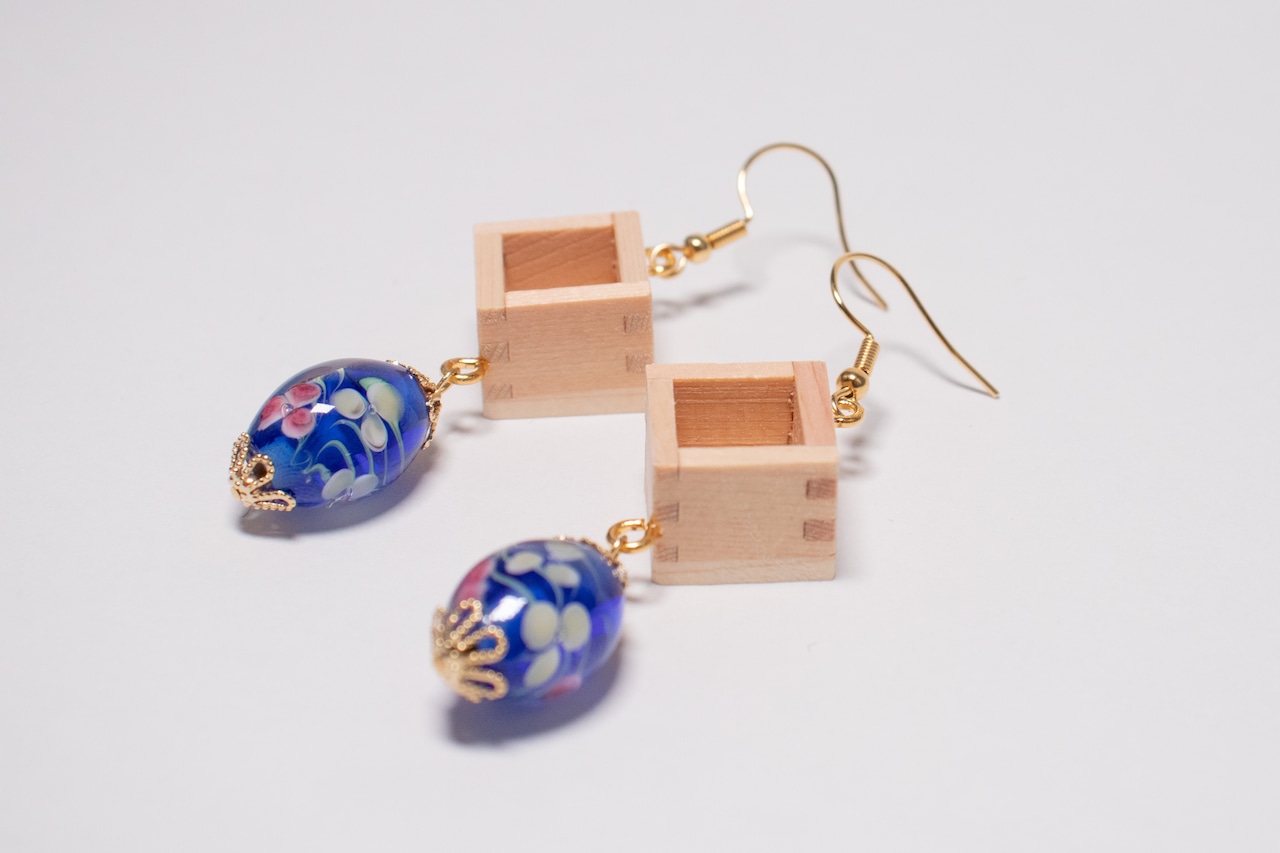
Among Japanese wooden jewelry, one piece is unlike anything else: the masu jewel by KUMIKI. The masu — Japan's traditional measuring box and a 1,300-year-old symbol of increasing fortune — is crafted at 1.6mm wall thickness, the smallest in the world, using authentic nail-free arare-gumi joinery.
Joined with tonbodama glass, natural stones, and precious metals, each masu becomes a necklace, earrings, or kanzashi — limited to 10 handmade pieces per month. It is hinoki jewelry, traditional craft, and a wish for prosperity, in a single piece small enough to rest at your collarbone.
Japanese Wooden Jewelry — FAQ
What is special about Japanese wooden jewelry?
It unites centuries-old craft techniques with wood's natural gifts: extreme lightness, warmth, subtle fragrance, and a patina that deepens with wear. Most artisan pieces are handmade in limited numbers.
Is wooden jewelry suitable for metal allergies?
Wood itself causes no metal allergy. Choose fittings in silver 925, K18 gold, or platinum — all available from KUMIKI.
How do I care for wooden jewelry?
Wipe with a soft dry cloth after wearing, avoid direct sun and humidity, dry promptly if wet, and apply perfume before — not after — putting the piece on.